


- Classroom Desk & Chair Packages
- Classroom Desks
- Collaborative Desks
- Combo Desks
- Computer Desks
- Double Pedestal Desks
- Dry Erase Whiteboard Tables and Desks
- Executive & Managerial Desks
- Hutches & Credenzas
- Modular Desks & Workstations
- Office Desks
- Reception Desks
- School Desks
- Single Pedestal Desks
- Sit/Stand Desks
- Standing Desks
- Teacher Desks
- Wheelchair & ADA Desks
- Activity Tables
- Adjustable Height Tables
- Banquet Tables
- Cafe & Breakroom Tables
- Coffee/End Tables
- Collaborative Tables
- Computer Tables
- Conference Tables
- Dry Erase Whiteboard Tables and Desks
- Flip Top Tables
- Folding Tables
- Library Tables
- Lounge Tables
- Makerspace Tables
- Mobile Tables
- Multimedia Tables
- Outdoor Tables
- Picnic Tables
- Pre-School Tables
- Sit/Stand Tables
- Stainless Steel Tables
- Table Trucks & Dollies
- Training & Seminar Tables
- Utility Tables
- Waiting Room & Reception Tables
- Wheelchair & ADA Tables
- Whiteboard Tables


- All Pre-School Furniture
- Active Play
- Bean Bag Chairs
- Children's Soft Seating
- Climbers
- Cots & Rest Mats
- Cribs Gliders & Changing Tables
- Cubbies
- Dramatic Play
- Indoor/Outdoor Play
- Literacy & Reading
- Mirrors
- Nursery
- Pillows & Cushions
- Pre-School Activity Tables
- Pre-School Art Furniture
- Pre-School Chairs
- Pre-School Classroom Chairs
- Pre-School Lockers
- Pre-School Makerspace, STEM & STEAM
- Pre-School Molded Seating
- Pre-School Partitions & Display Panels
- Pre-School Storage
- Pre-School Tables
- Pre-School Tables & Chair Sets
- Sand & Water Tables
- Soft Play
- Strollers & Buggies
- Trikes & Scooters
Executive Desks

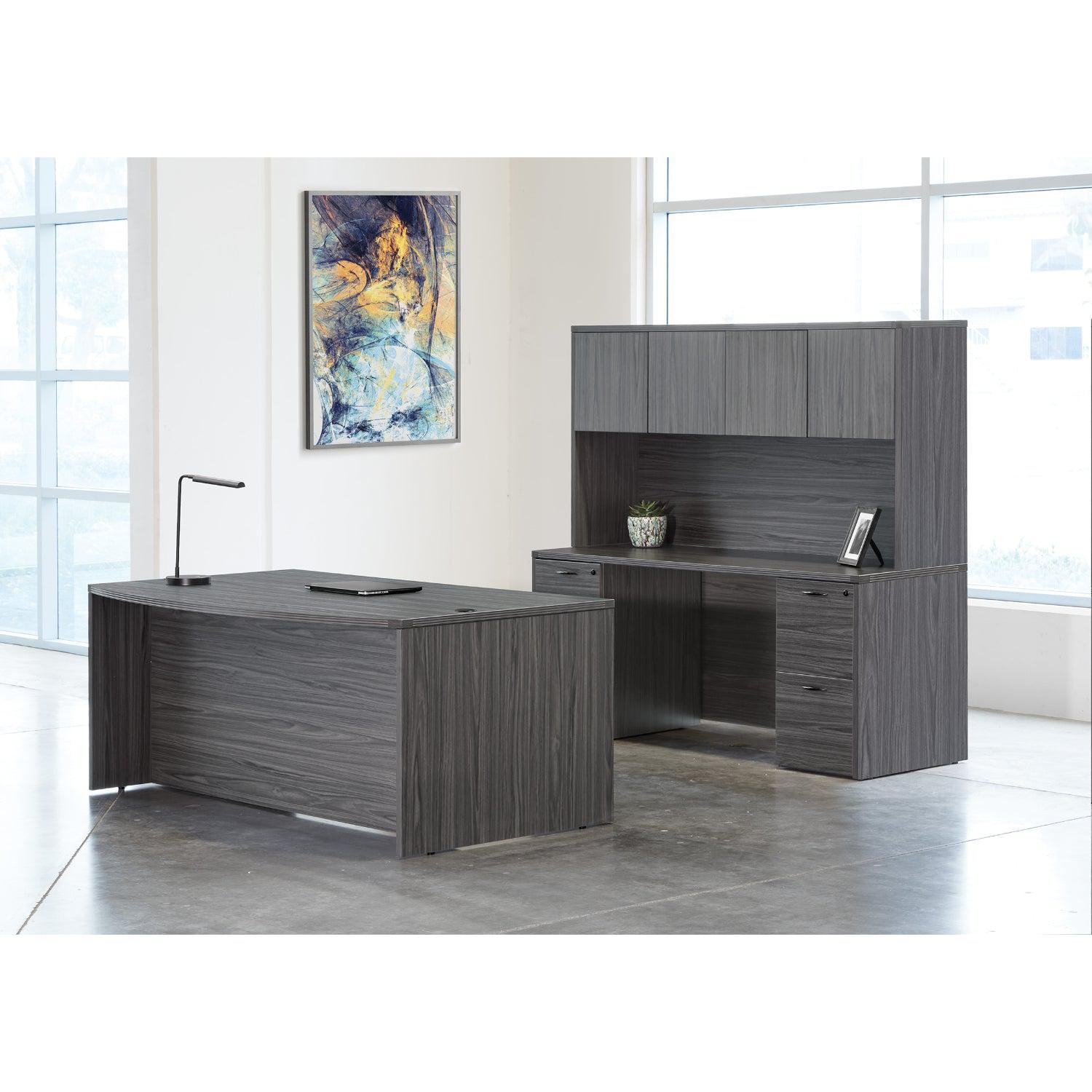

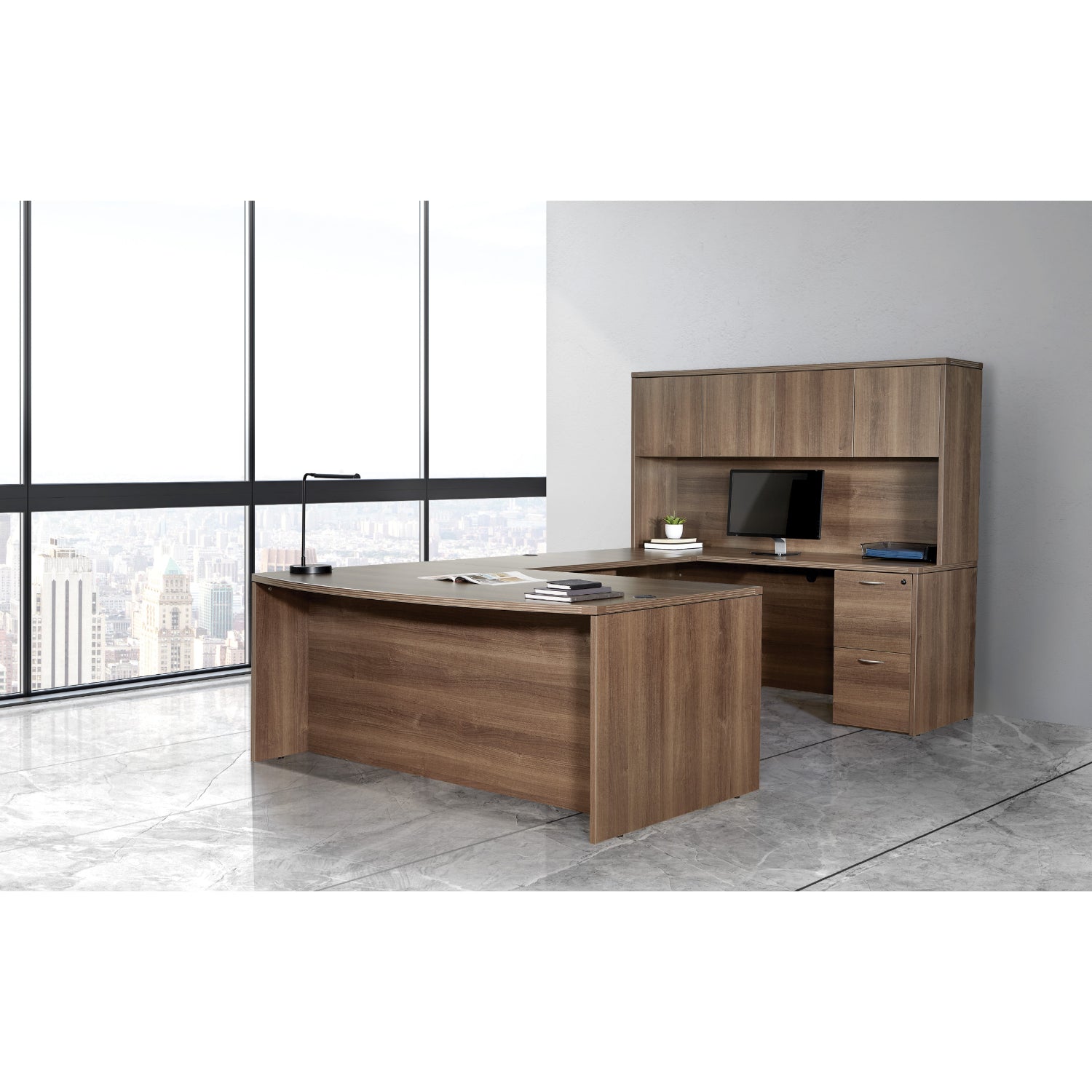

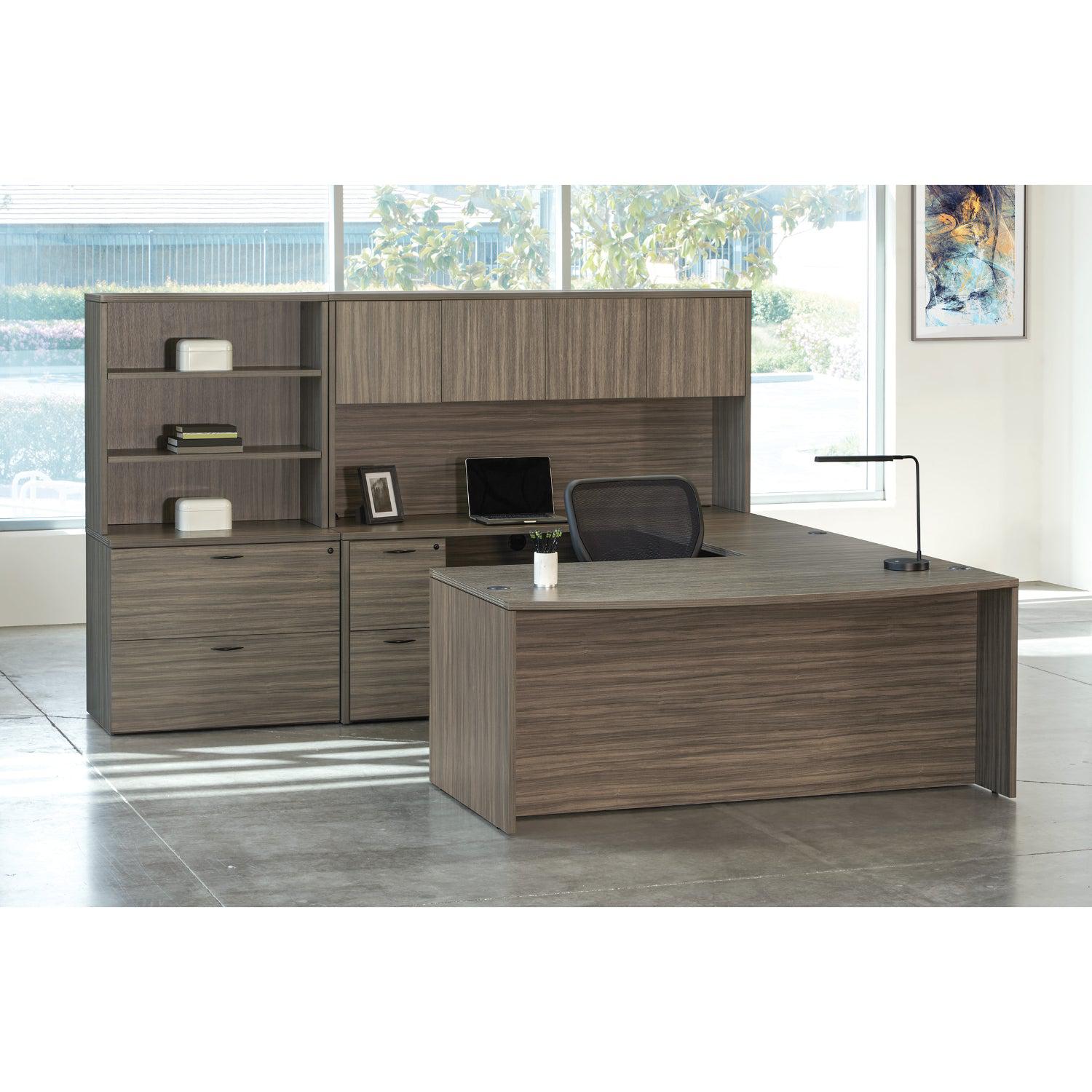

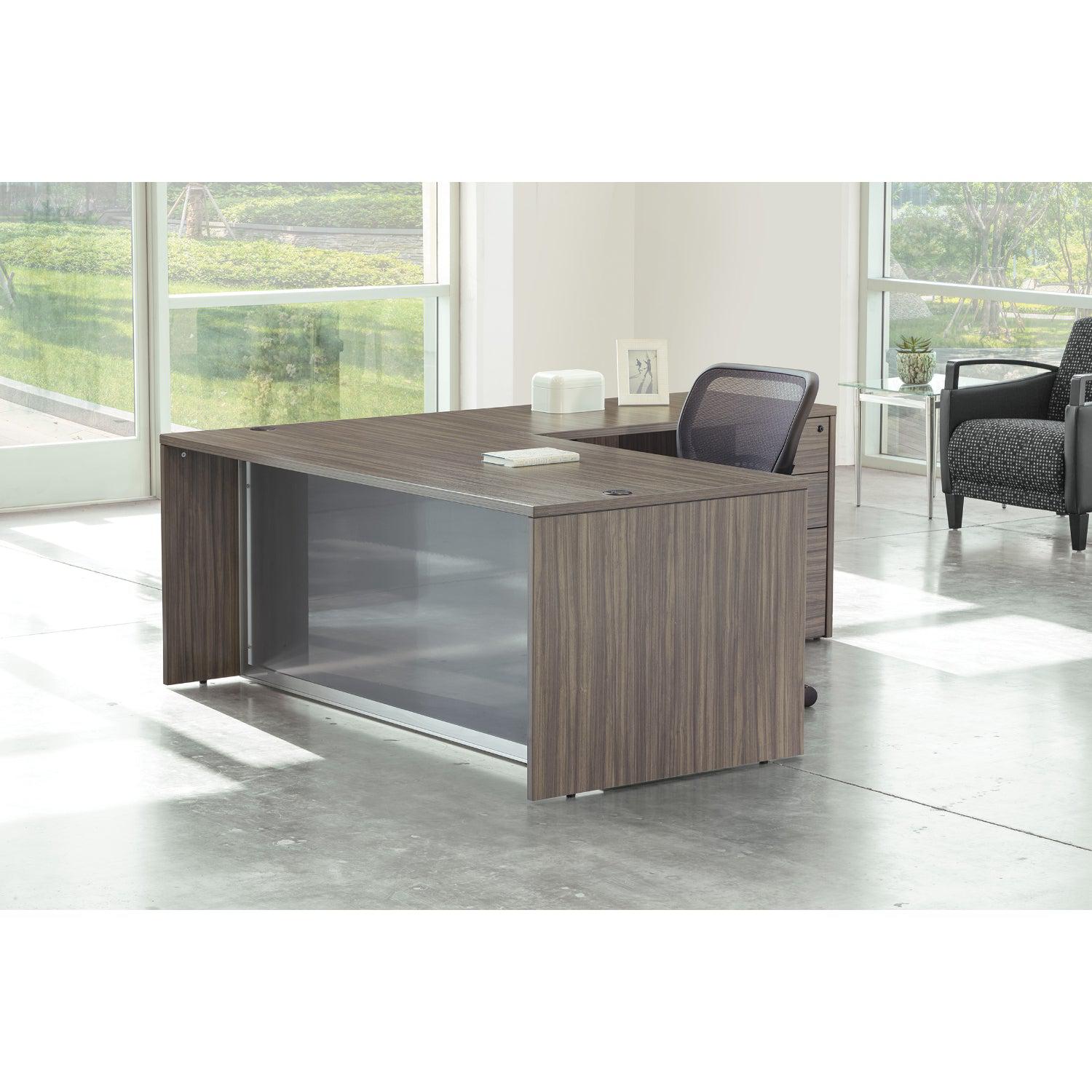

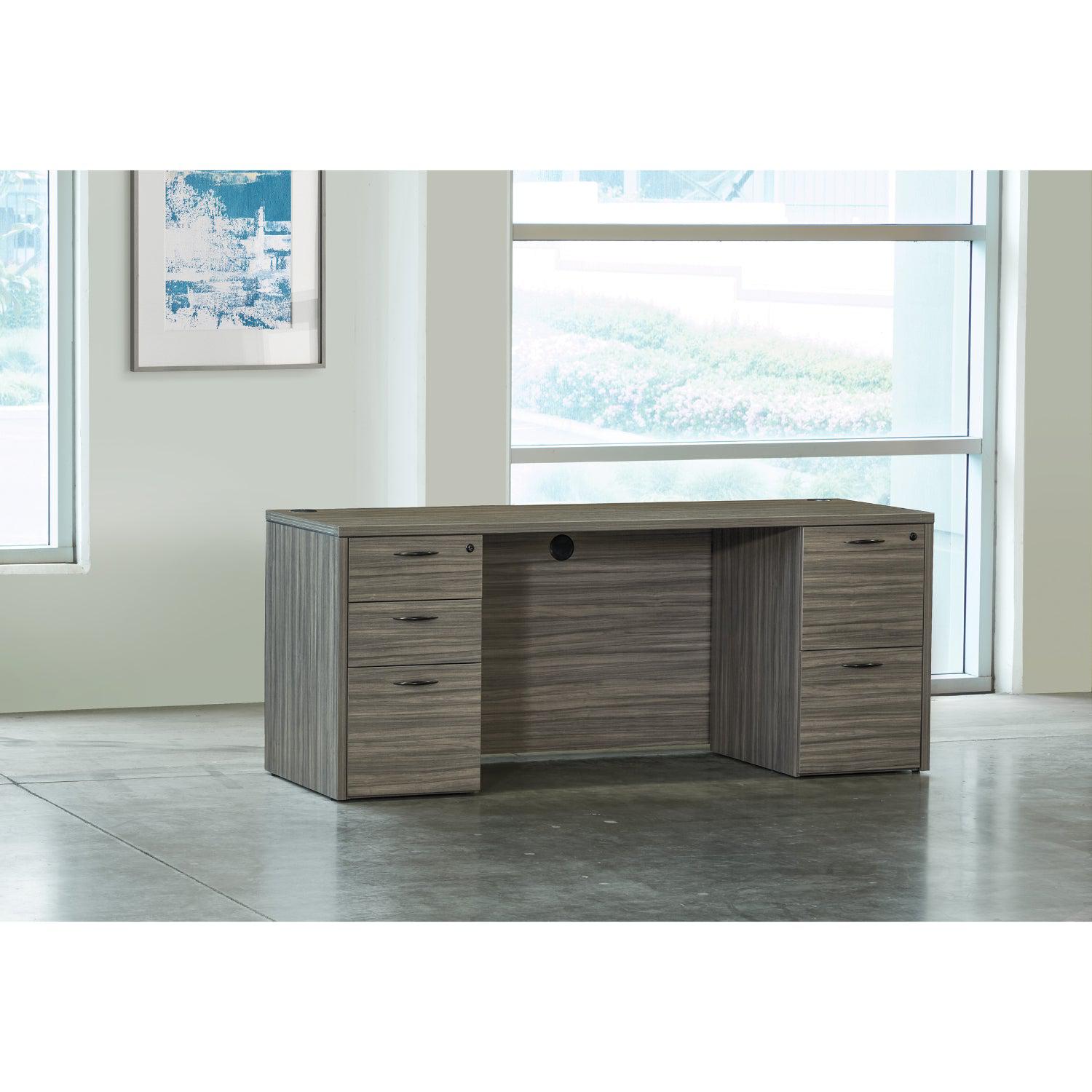

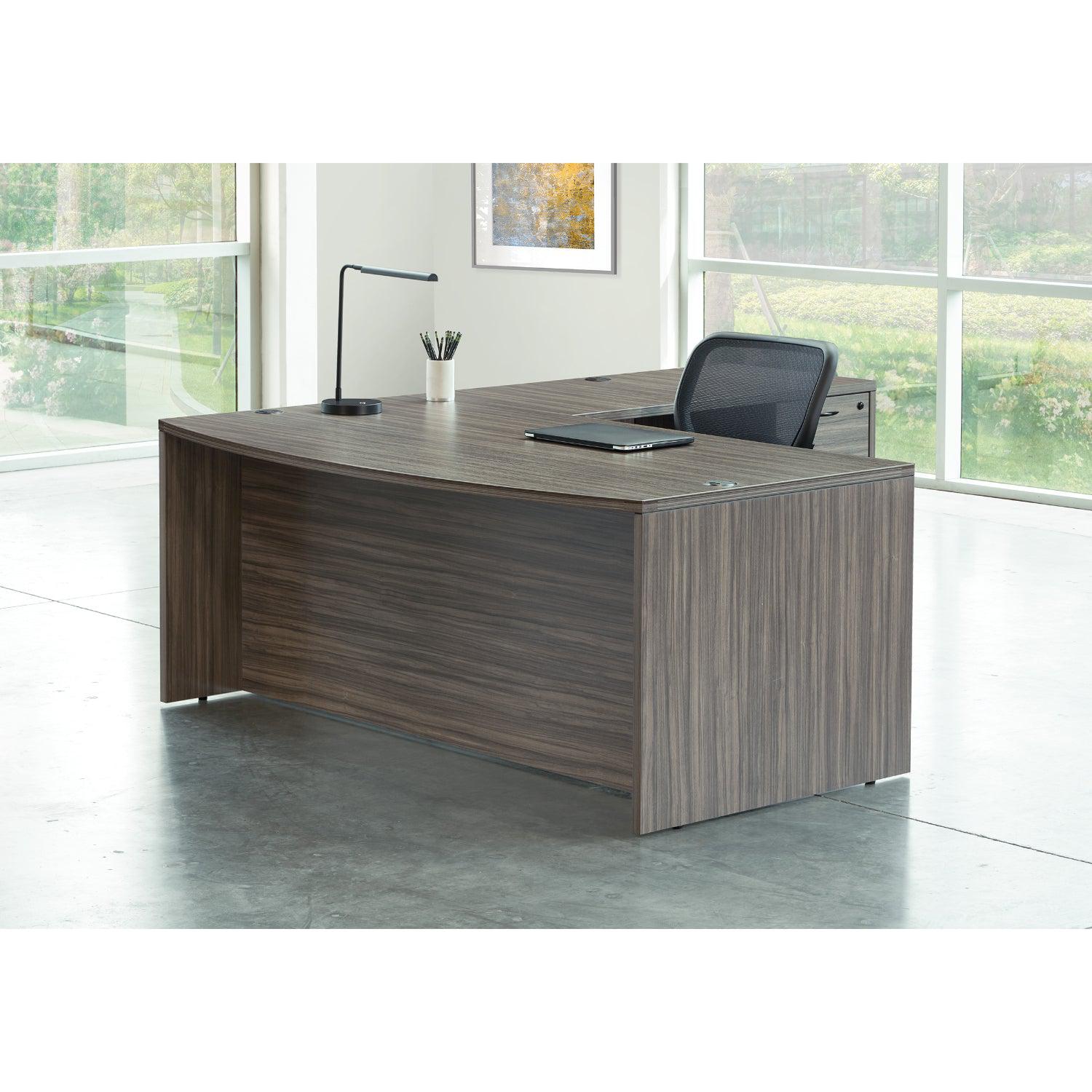

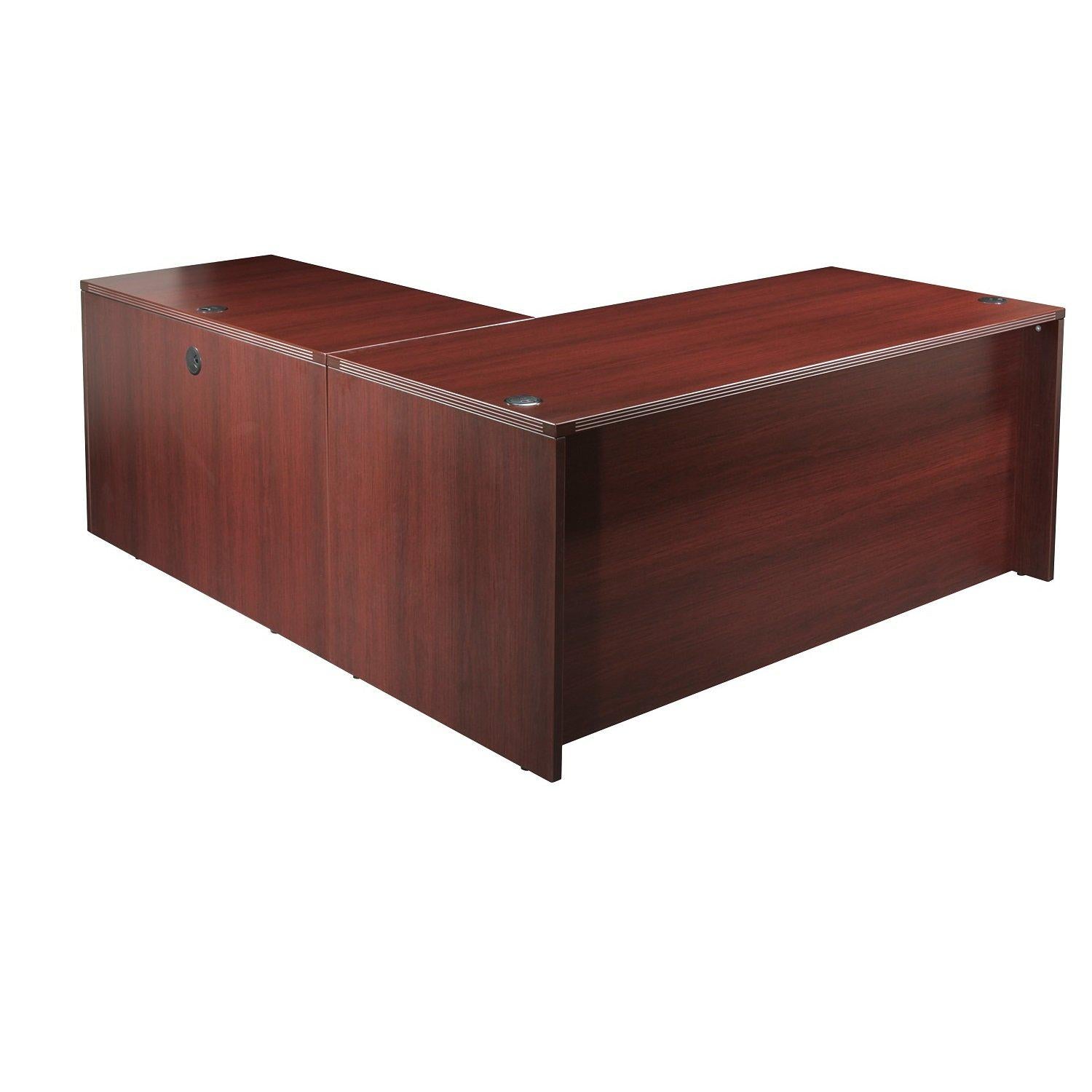

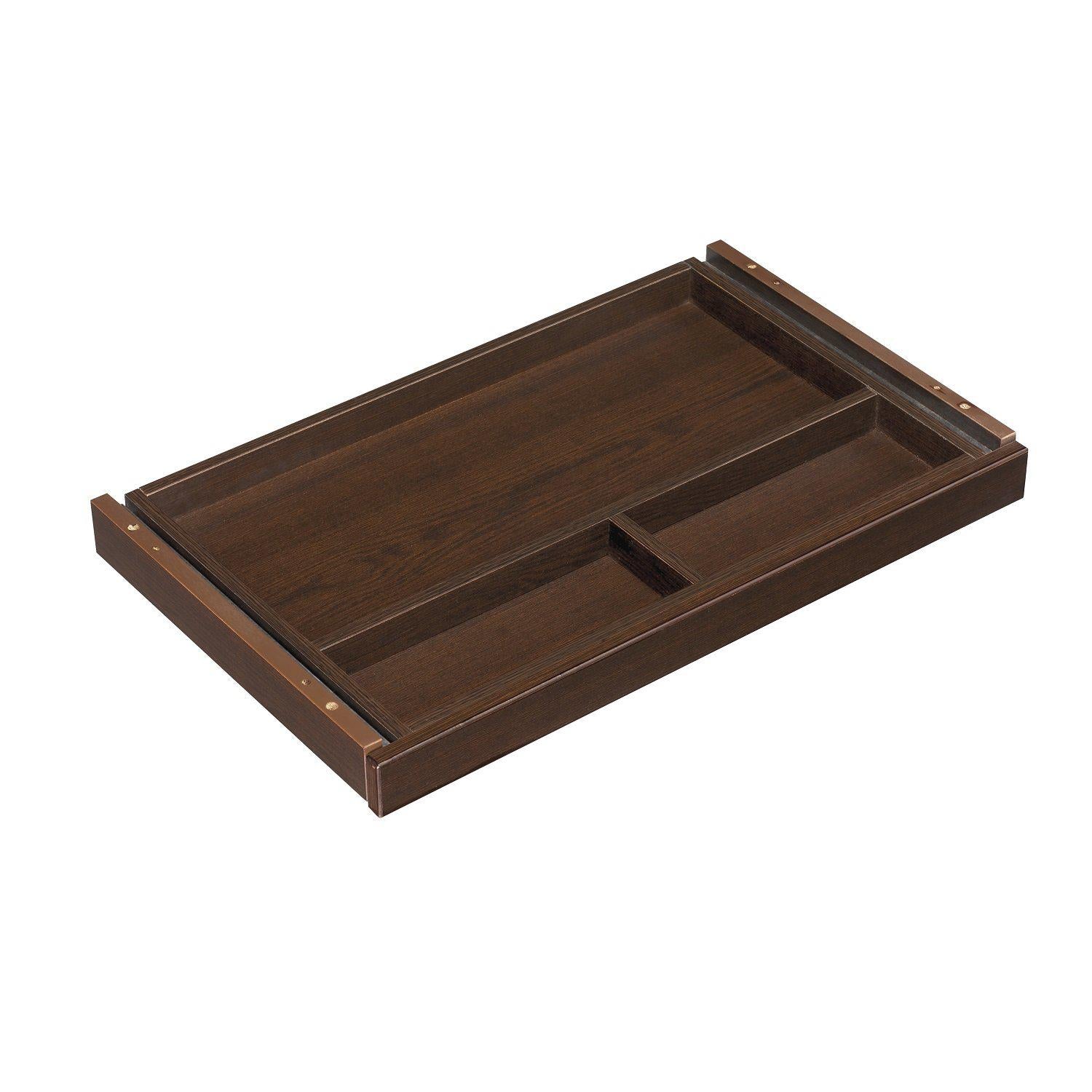

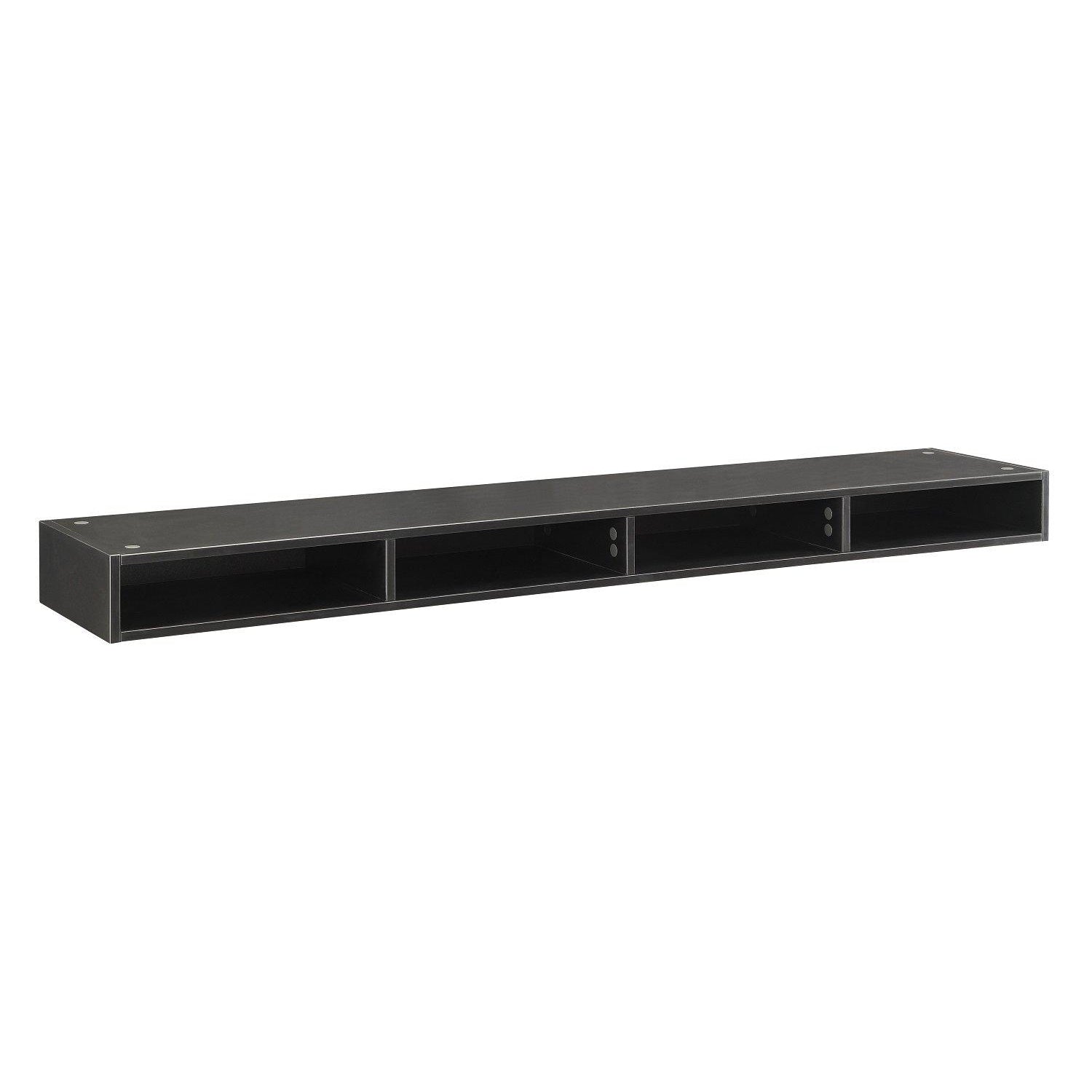

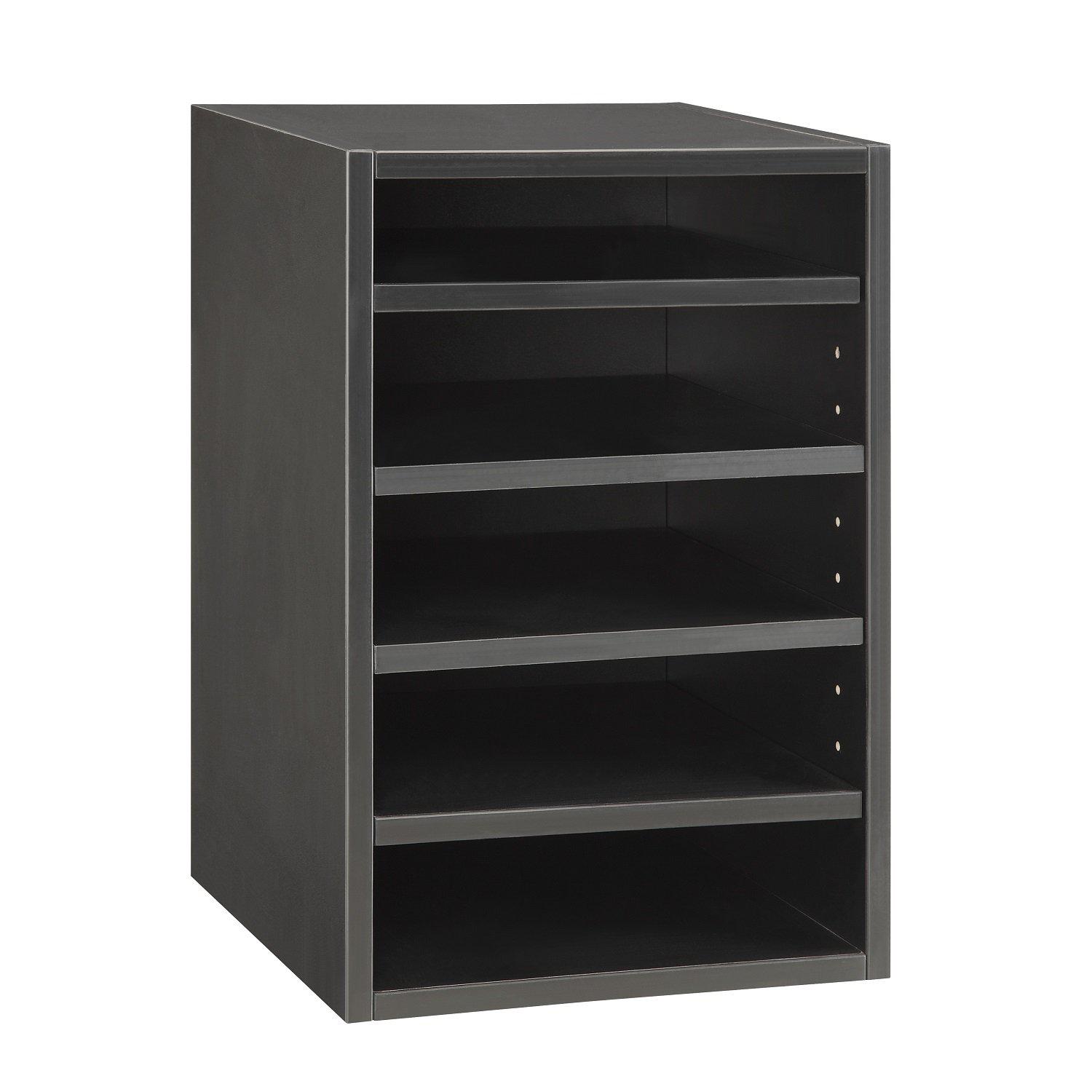

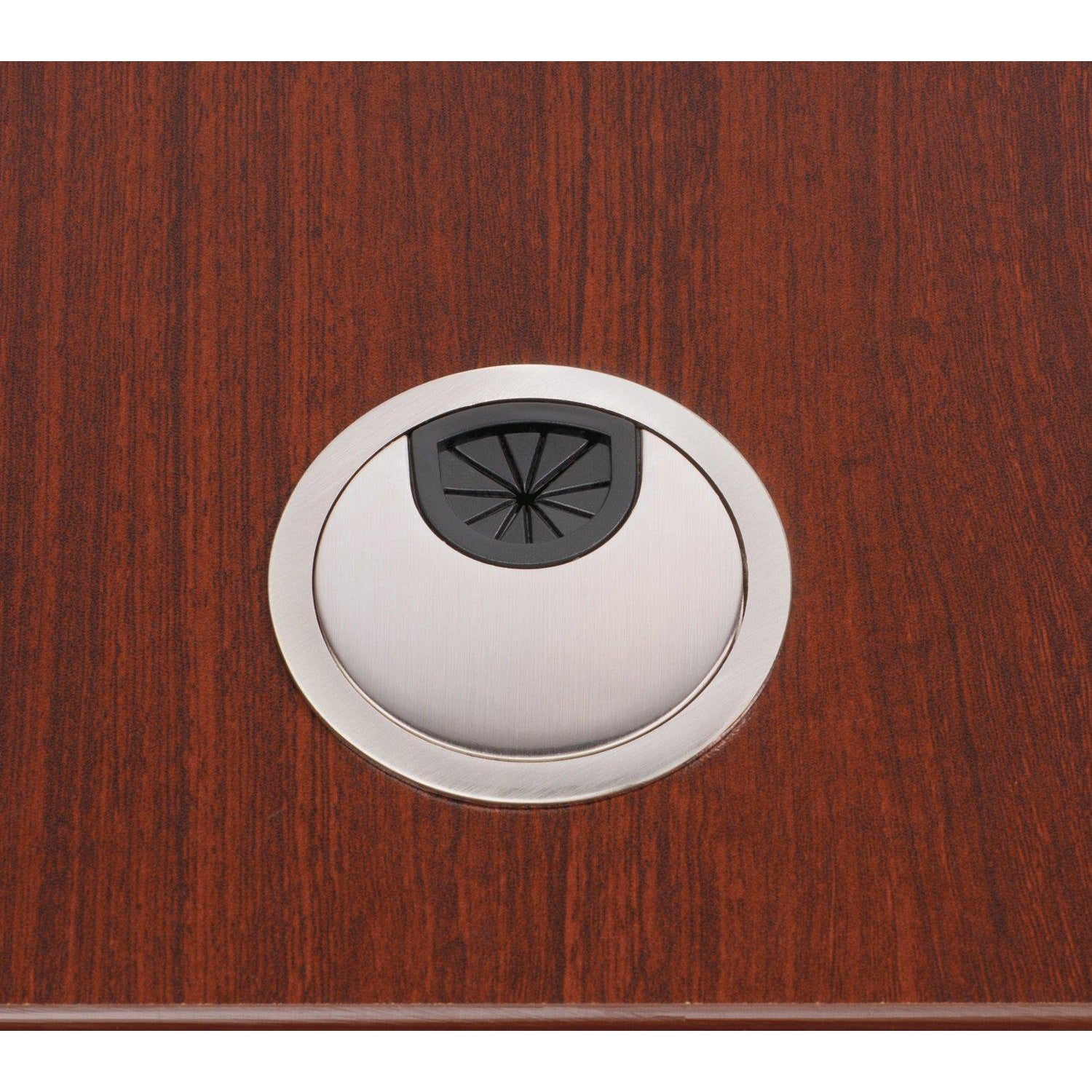

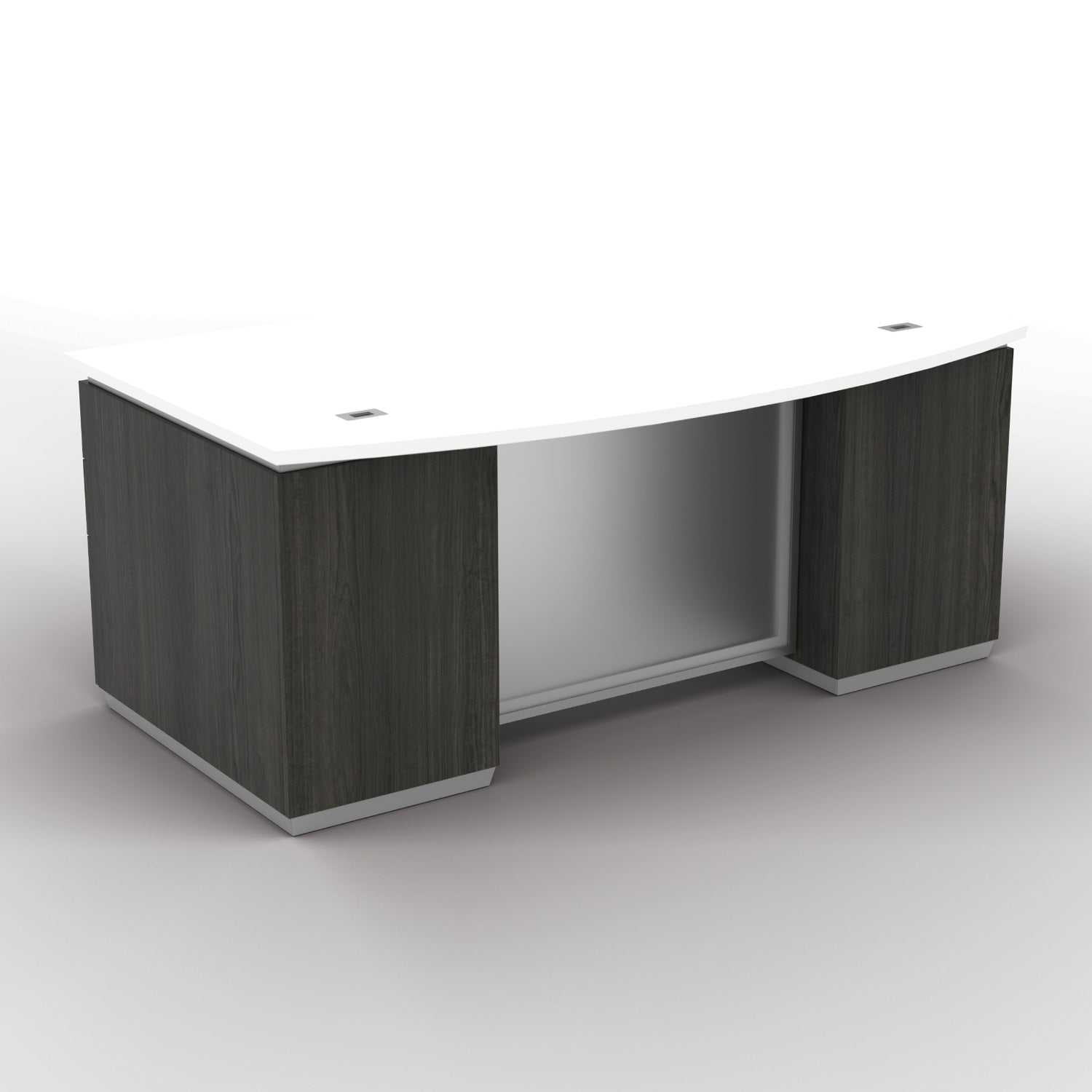

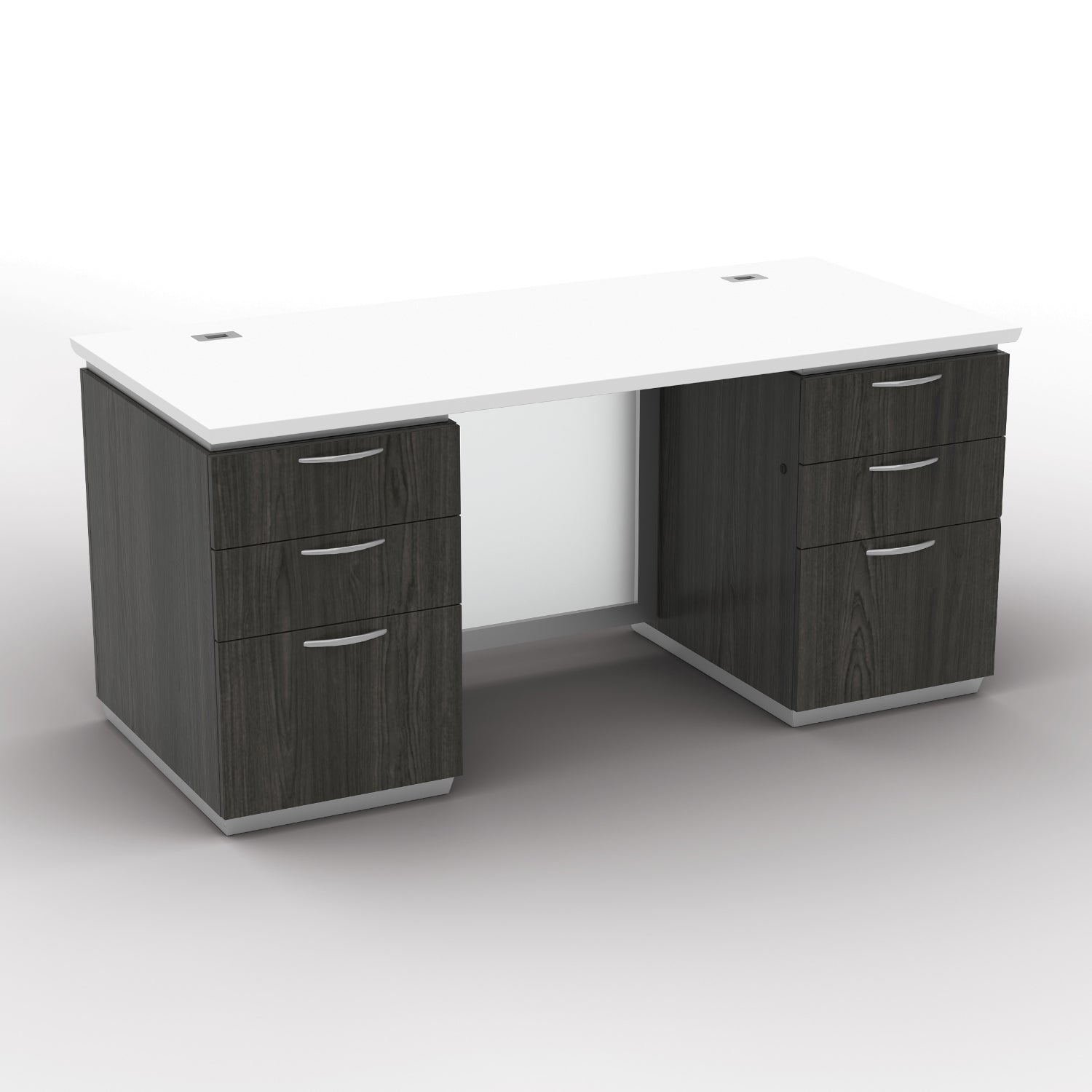

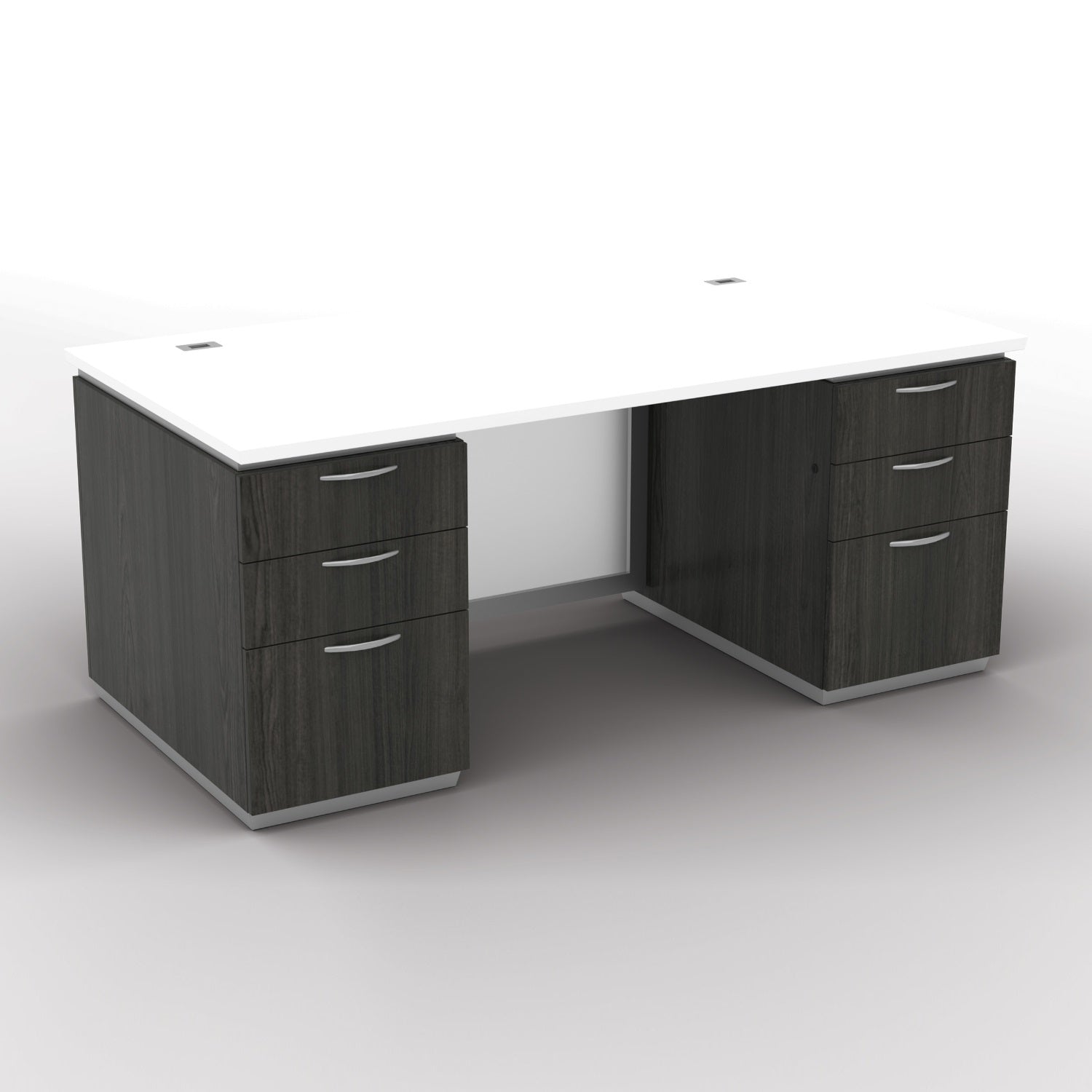



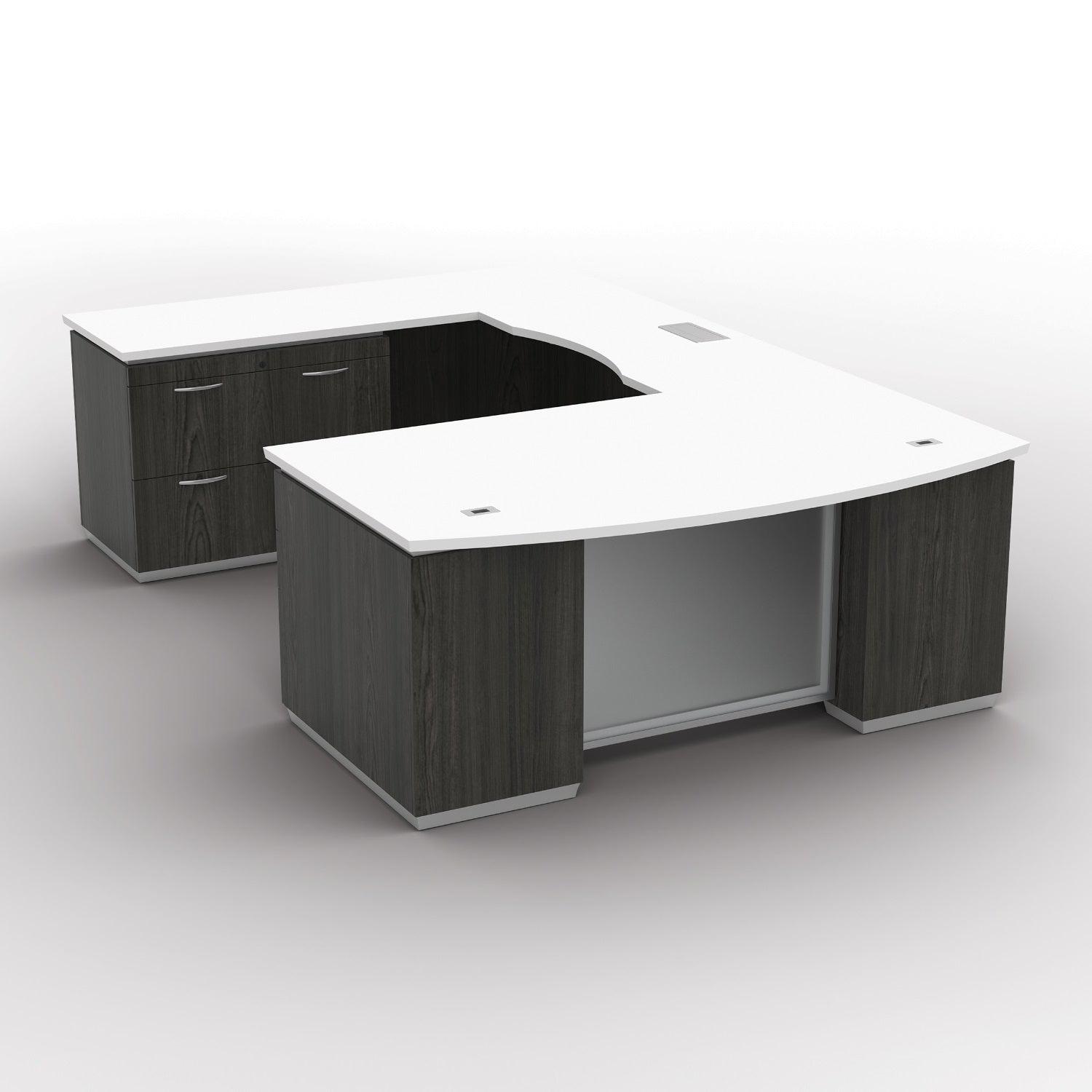

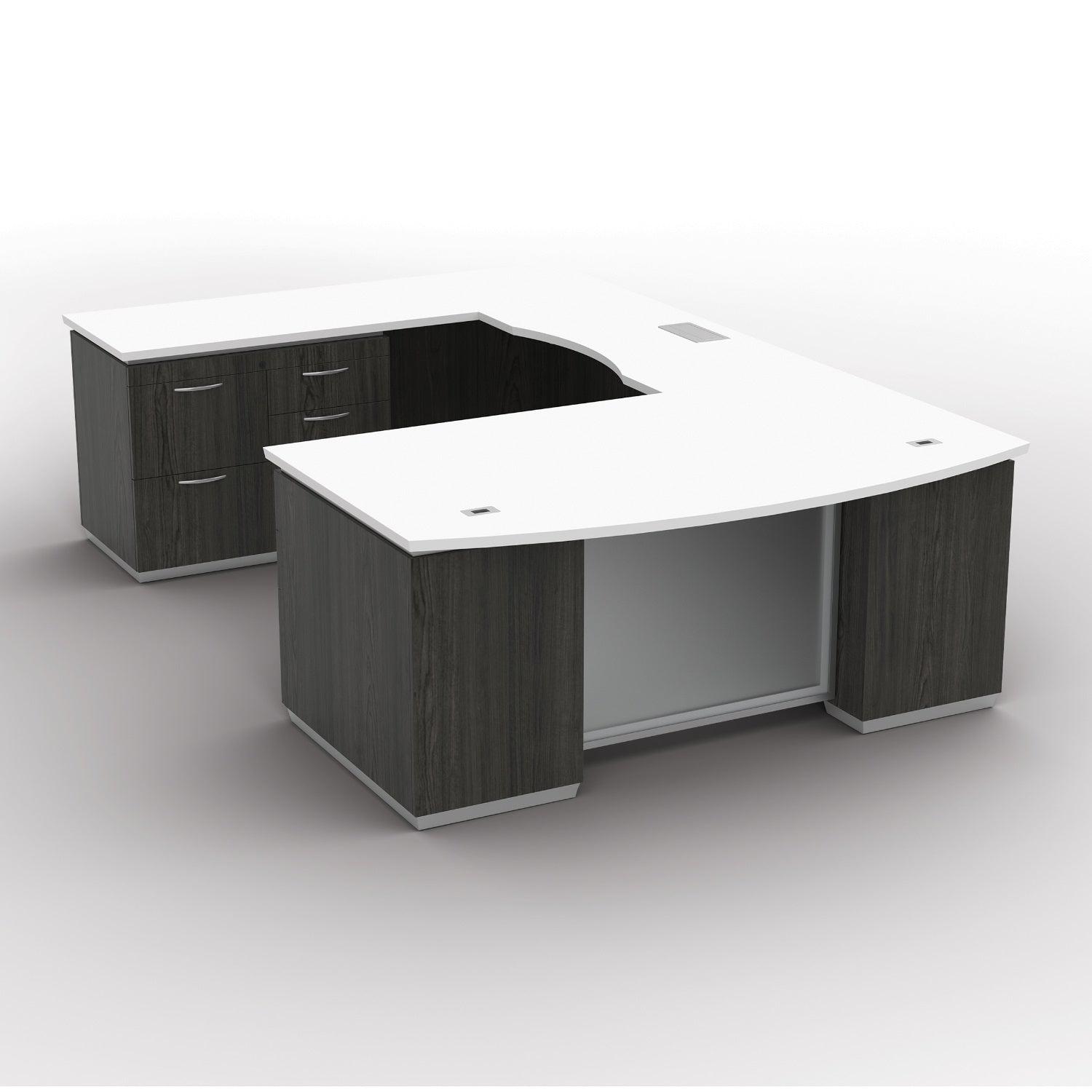

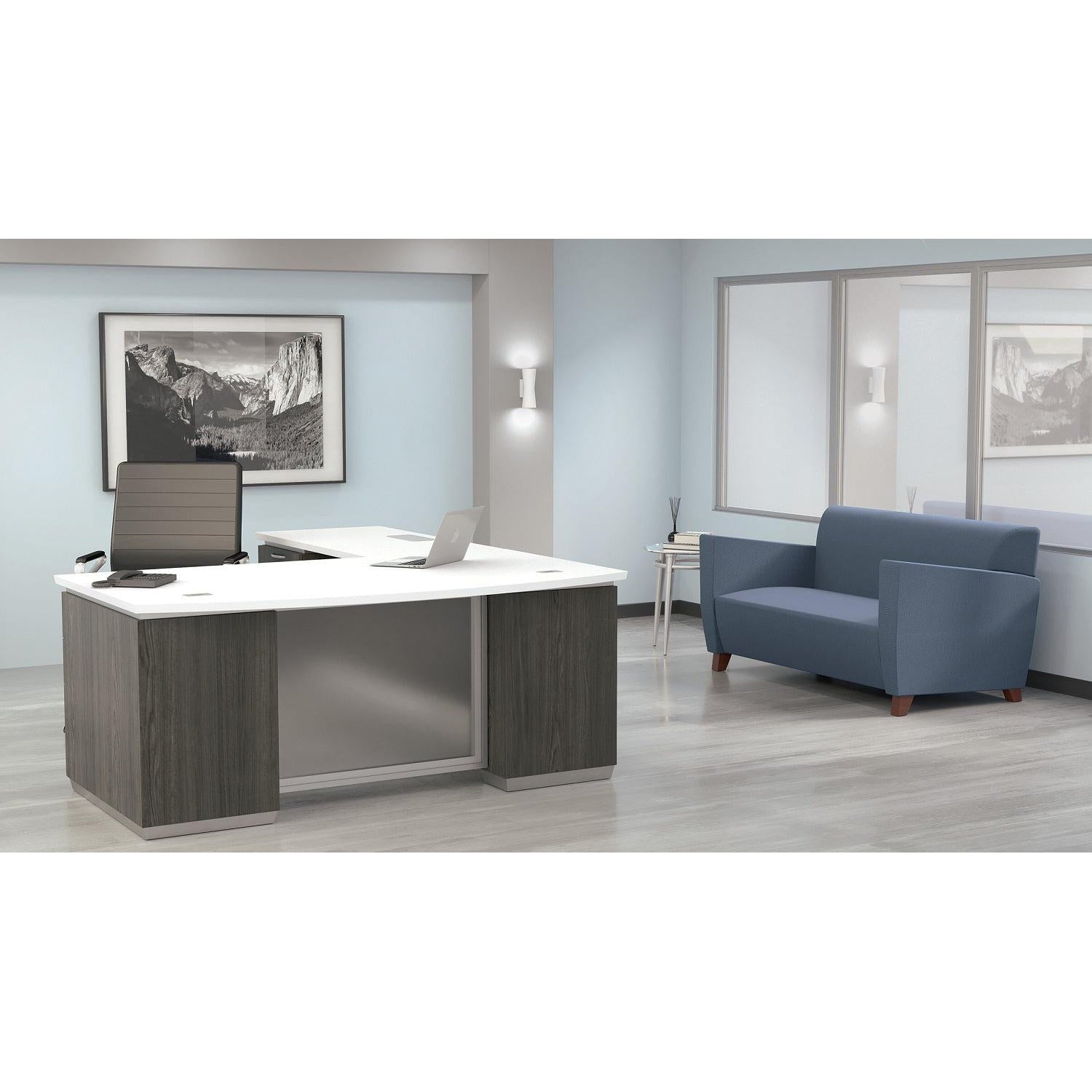

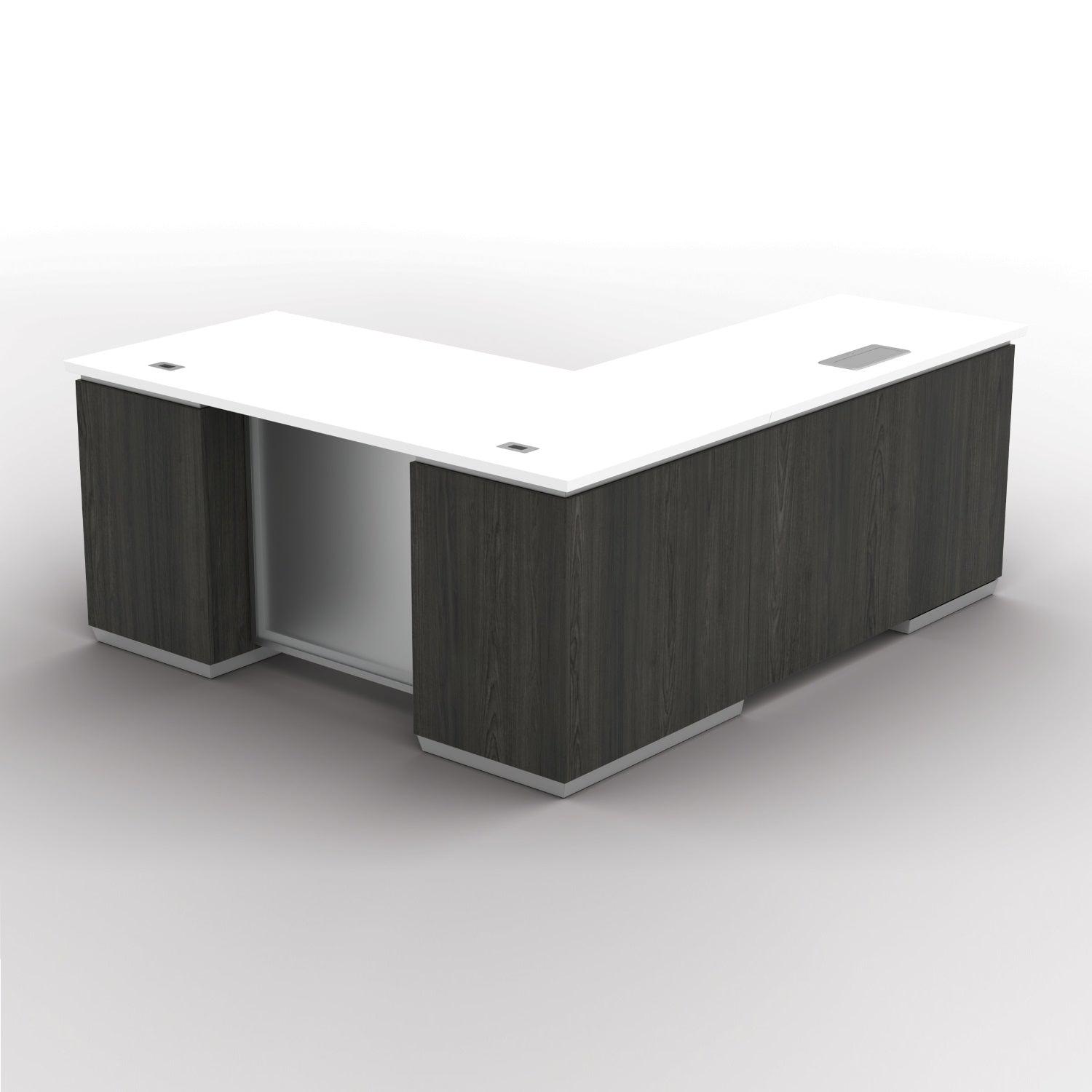

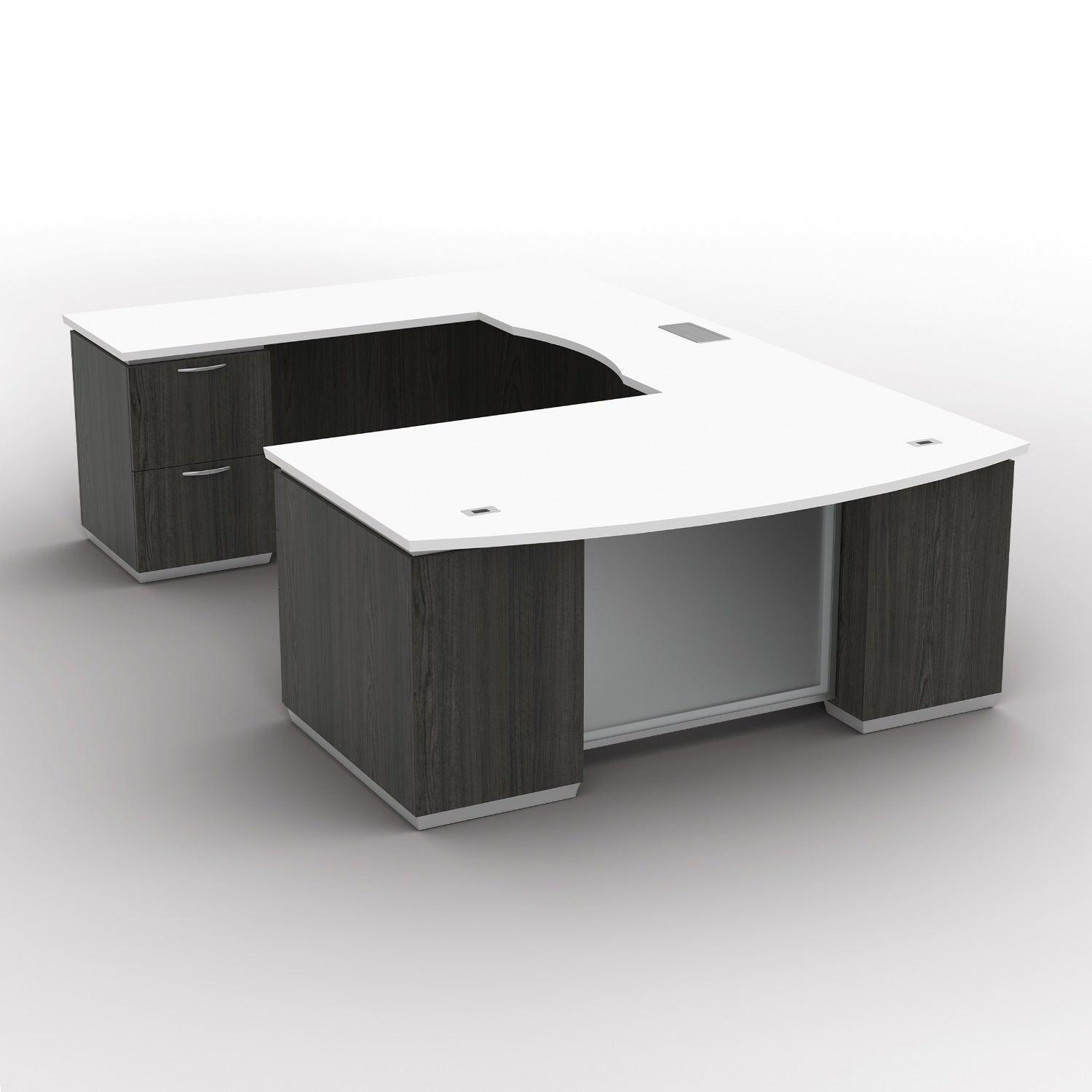

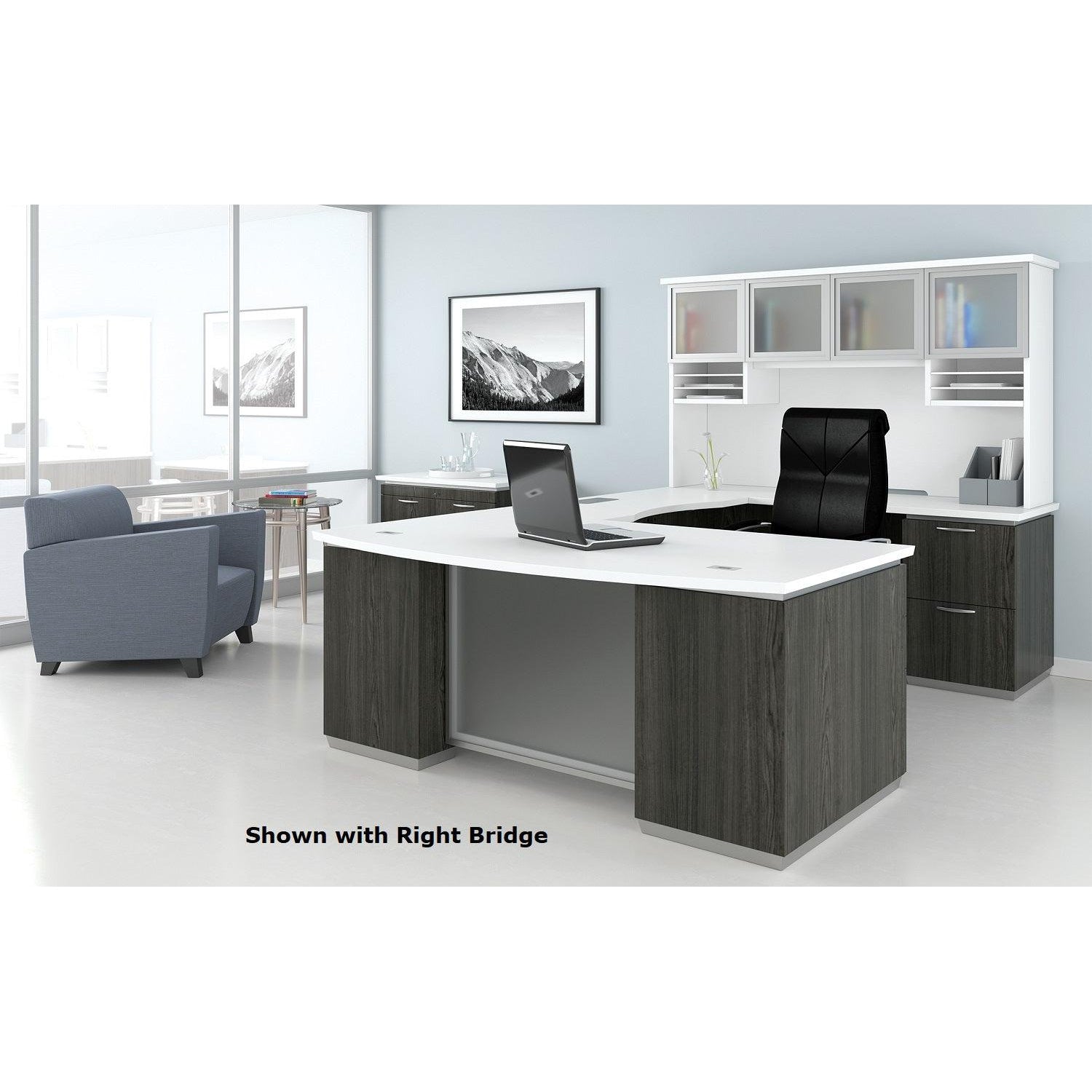

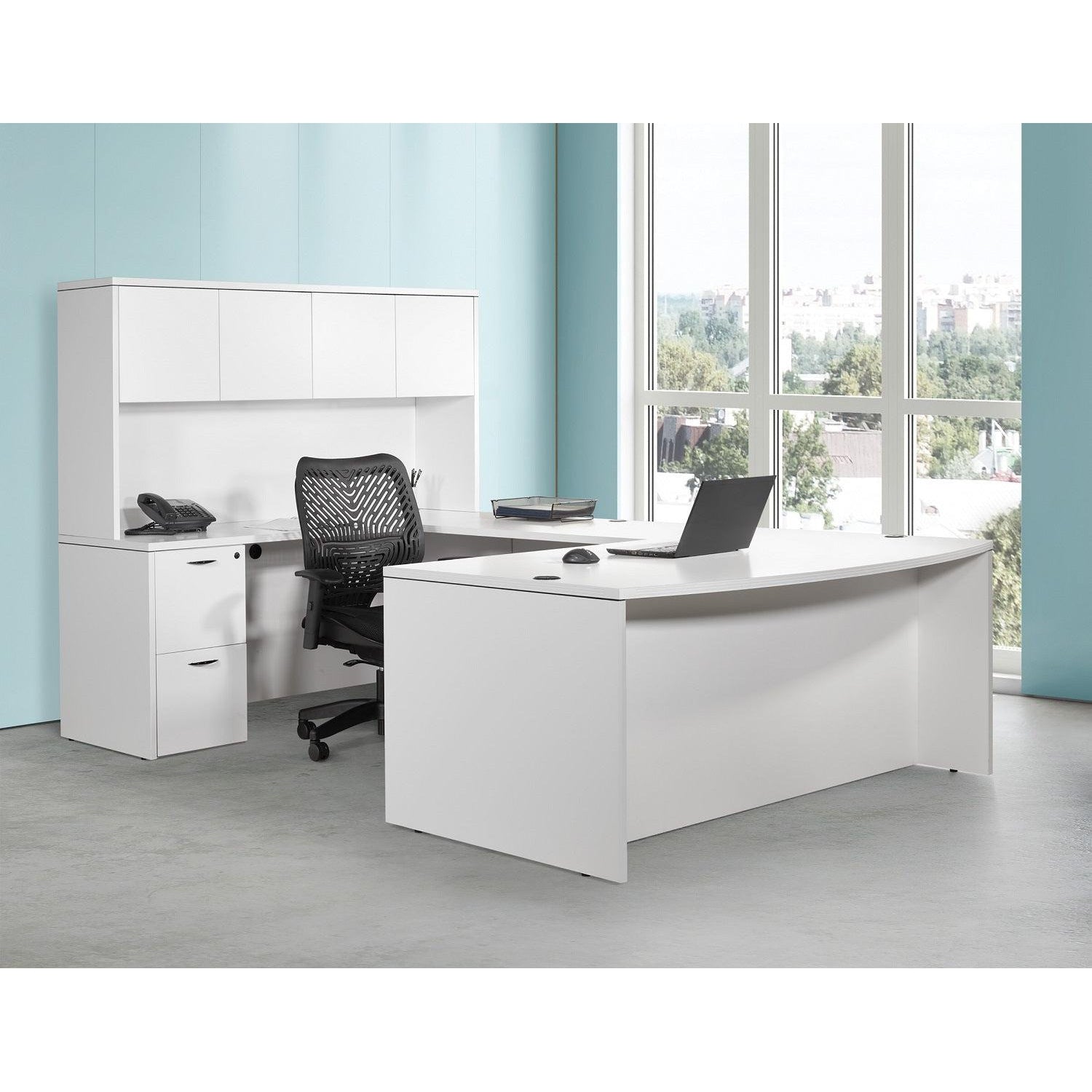

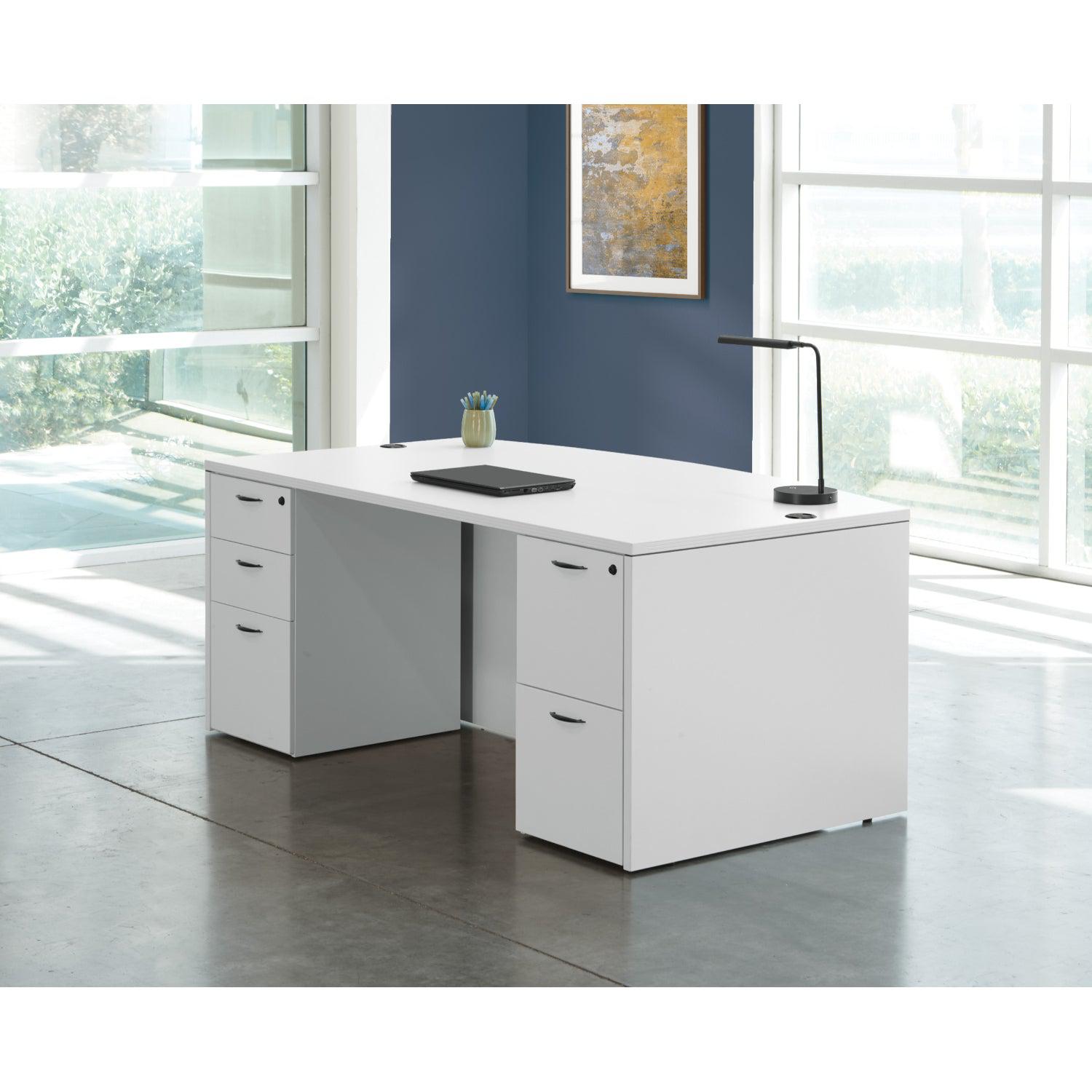
An executive desk is a full-size desk built for a private office. It gives one person room for a computer and spread paperwork, with space left over for a visitor across the desk. Most run 60 to 72 inches wide and carry their own drawer storage in built-in pedestals. They're finished on all four sides as well, because a desk that sits out in the room is seen from every angle.
This collection covers our executive office desks across every line NextGen carries, from value laminate through to heavier traditional casegoods. Napa, Lodi, Tuxedo, and Tuxedo White each sit at a different price and weight, and that variety is what lets you specify the same configuration for a single manager's office or for an entire floor of offices. We stock all four lines. The room and the budget decide the desk.
Choosing between the lines
The lines differ in materials and price. Every style here comes in the core desk configurations, so the decision usually comes down to how much visual weight the desk should carry in the room and what the budget allows.
Napa is the value line and the volume seller. It's contract-grade construction: 1-1/8-inch worksurfaces, 1-inch end panels, impact-resistant 3 mm PVC edges, single-key locking, and built-in wire management. It meets ANSI/BIFMA standards and carries GREENGUARD certification. Wire management and locking are the functionality worth checking on a spec sheet, since neither is easy to add after the desk is in the room. Because Napa ships flat and ready to assemble, it costs a fraction of comparable delivered-and-installed furniture. The full range is in the Napa office collection.
Lodi and Tuxedo sit above Napa. Tuxedo is the heaviest option in the collection and reads traditional. That counts for something in a law or medical practice, or anywhere the furniture is part of how the business presents itself. Tuxedo White is the same construction with a white top and a slate gray base, for an office that wants that weight in a lighter room.
Configurations
Double-pedestal and bow-top desks
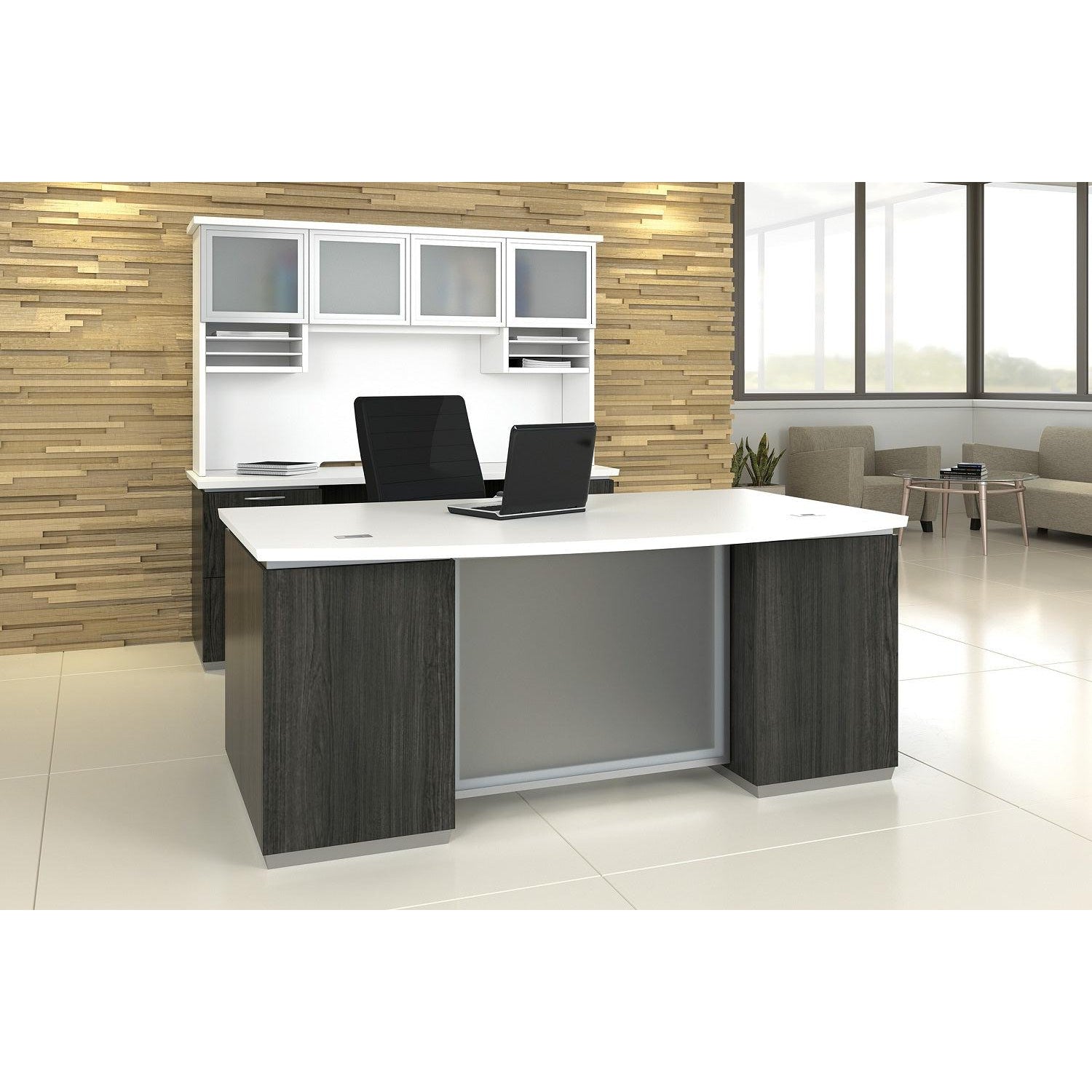
Most private offices end up here. A rectangular top sits on a pedestal at each side, at 60 by 30, 66 by 30, or 71 by 35 inches. The bow-top version curves the user's edge inward, so you can reach further across the surface and lean in toward the person opposite without the desk getting any wider. In a room that has to seat two visitors, that matters more than two extra inches of width.
Two guest chairs need about 52 inches of clear floor side by side, so a 60-inch top is the smallest that seats two people square to the desk without one of them sitting off the corner.
L-shaped desks
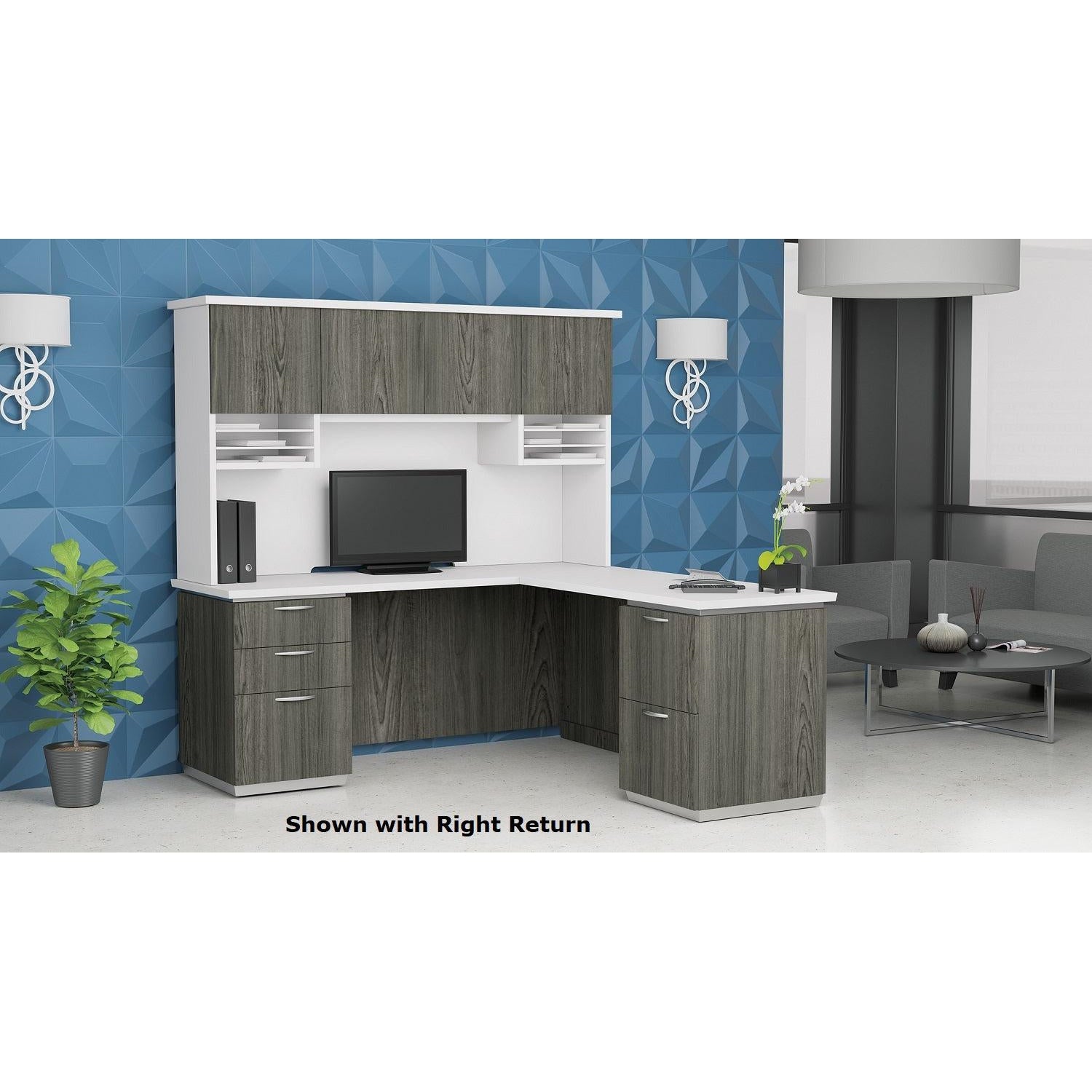
Add a return at a right angle to the main desk, and you create a second surface where a monitor and printer can live permanently. Anyone running two tasks side by side tends to land here.
Order the correct hand. The Tuxedo L-shape comes as separate right-return and left-return products, and neither is reversible. Stand where the desk will go and decide which side the return belongs on before you buy, or you'll end up with a return across the doorway and a monitor facing the window. A 36-inch door opening inward claims about 3 feet of the nearest wall, so the return has to start past the swing or the door stops on it.
U-shaped and large executive desks
The U-shape belongs to whoever works at the desk all day and wants everything reachable from the seat. A bridge and a rear credenza close the third side. It's also the configuration most likely to overrun the space you have, so measure the whole floor area, including the door swing and any walkway behind the chair.
Executive desks with hutch
When an office runs out of floor, the next capacity goes up. A hutch stacks storage above the worksurface. Lodi offers wood-door and wood-and-glass-door hutches, and Tuxedo pairs a wood-door hutch with either return orientation. Glass doors keep the room feeling open and suit books or awards you want on display. Solid doors hide the contents and help when the desk is visible from a waiting area. Standalone hutches and matching credenzas are in hutches and credenzas.
Drawers and storage
Every configuration here carries its storage in the desk itself. Pedestals come in two standard arrangements: box/box/file puts two shallow drawers over one hanging file drawer, and file/file gives you two full hanging file drawers. Most configurations pair one of each, so chargers and desk accessories live on one side and active files on the other. The side you put files on comes down to the ease of reaching a drawer one-handed from the chair.
Napa pedestals and cabinets use single-key locking, so one key opens both a user's drawers and their storage cabinet. Nobody has to carry a keyring. Where a desk needs more capacity than its pedestals provide, add a credenza behind the chair. Matching cabinets and towers are in storage cabinets.
Sizing an executive office
Most rooms fail on clearance, so find that number before you choose a desk. Leave at least 36 inches behind the desk so a chair can push back without hitting a wall or credenza, and 36 more if anyone needs to walk behind a seated person, so that's roughly 72 inches of depth in total. A 71-by-35 Tuxedo works out at 107 inches of room depth once the chair zone and the walkway are added, which is just under 9 feet before a single visitor chair goes in front of it. On an L-shape or U-shape, measure the full outside dimensions including the return, because the return is usually the part that won't clear.
If the desk faces the door, allow floor space for two visitor chairs in front of it that still leaves the entrance clear. If it faces a window, check where the light falls at the hour the room actually gets used. A screen washed out by high afternoon sun, or a desk left in low light on a winter morning, is a problem furniture quality can't fix. Keep the files you open daily within arm's sweep of the chair, since reach is where layout meets productivity.
Furnishing more than one office
When several offices are furnished at once, specifying one line across all of them holds the floor together. Each line runs a consistent finish range and edge detail across desks, credenzas, storage, and conference tables, so a floor can be specified once and added to years later with the new pieces still matching the old ones.
Where a floor is client-facing, professionalism is part of the brief, and one line across every office delivers it. That consistency also makes the offices easier to run, since a floor where every desk opens and locks the same way doesn't need explaining to whoever moves into it.
NextGen offers free space planning, so you can see how the offices will work before anything ships. Because we install the floors we plan, we know how a layout behaves once it's in the room. Send a floor plan through project management and design, and we'll come back with products and quantities. For bulk pricing and lead times, call (215) 259-5300 or email info@nextgenfurn.com.
Frequently asked questions
What size is a standard executive desk?
Most run 60 to 72 inches wide and 30 to 36 inches deep, with a seated surface height of 29 to 30 inches. Below 60 inches wide, you're into standard office desks. Above 72 inches, the extra working area usually comes from an L-shape or U-shape return.
What is the difference between an executive desk and a regular office desk?
Mainly width and storage. An executive desk is wider and carries its own pedestal drawers. It's finished on all four sides too, since it usually sits out in the room where every side shows. A standard office desk is narrower and usually has no built-in storage, because it's built to sit in a row against a wall.
Can I get an executive desk that seats visitors?
Any double-pedestal or bow-top desk will take two visitor chairs in front. Of the two shapes, bow-top is the more comfortable for it, because the curved edge lets you lean in toward your visitor. Guest seating is sourced separately from reception and guest chairs.